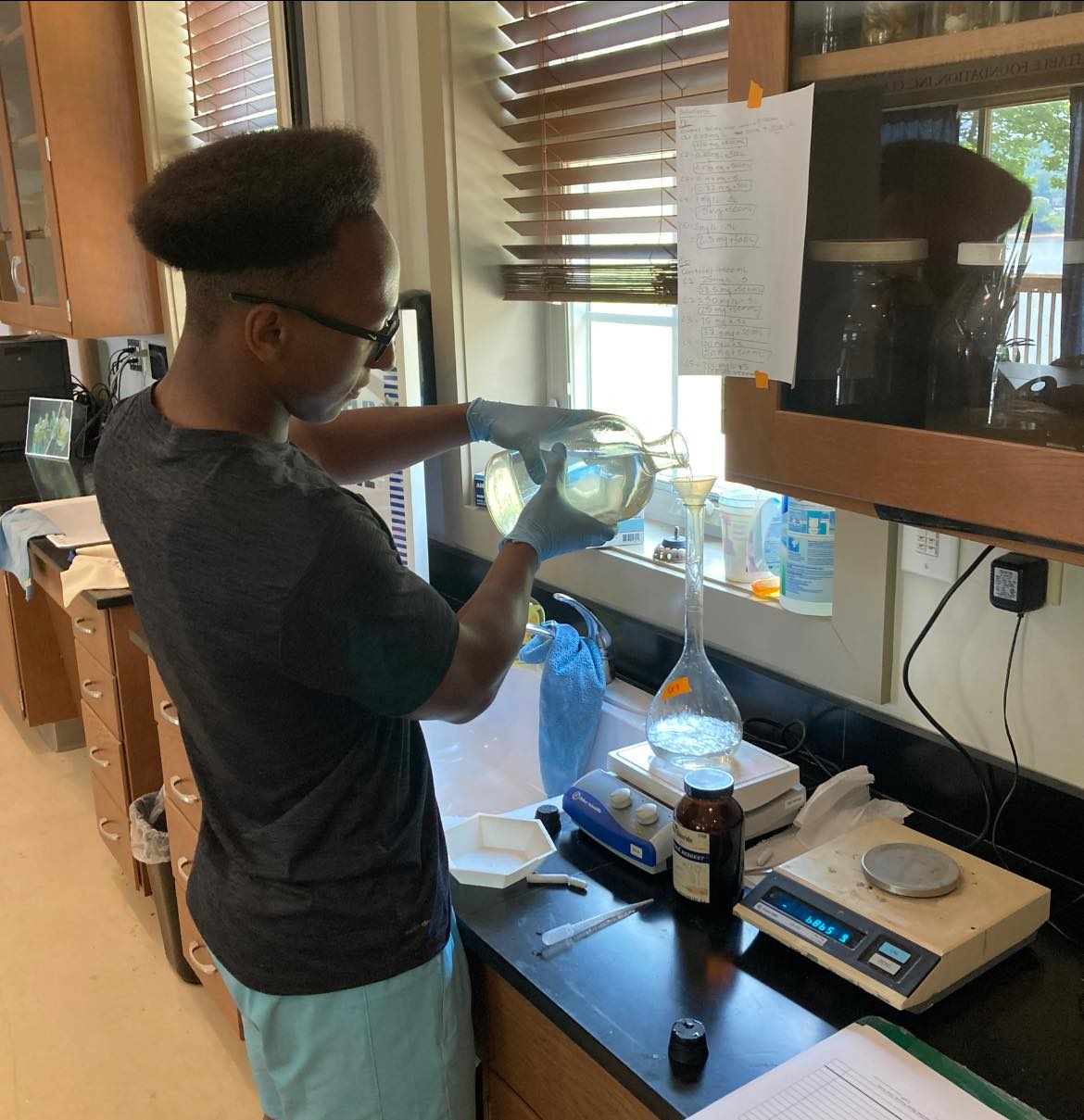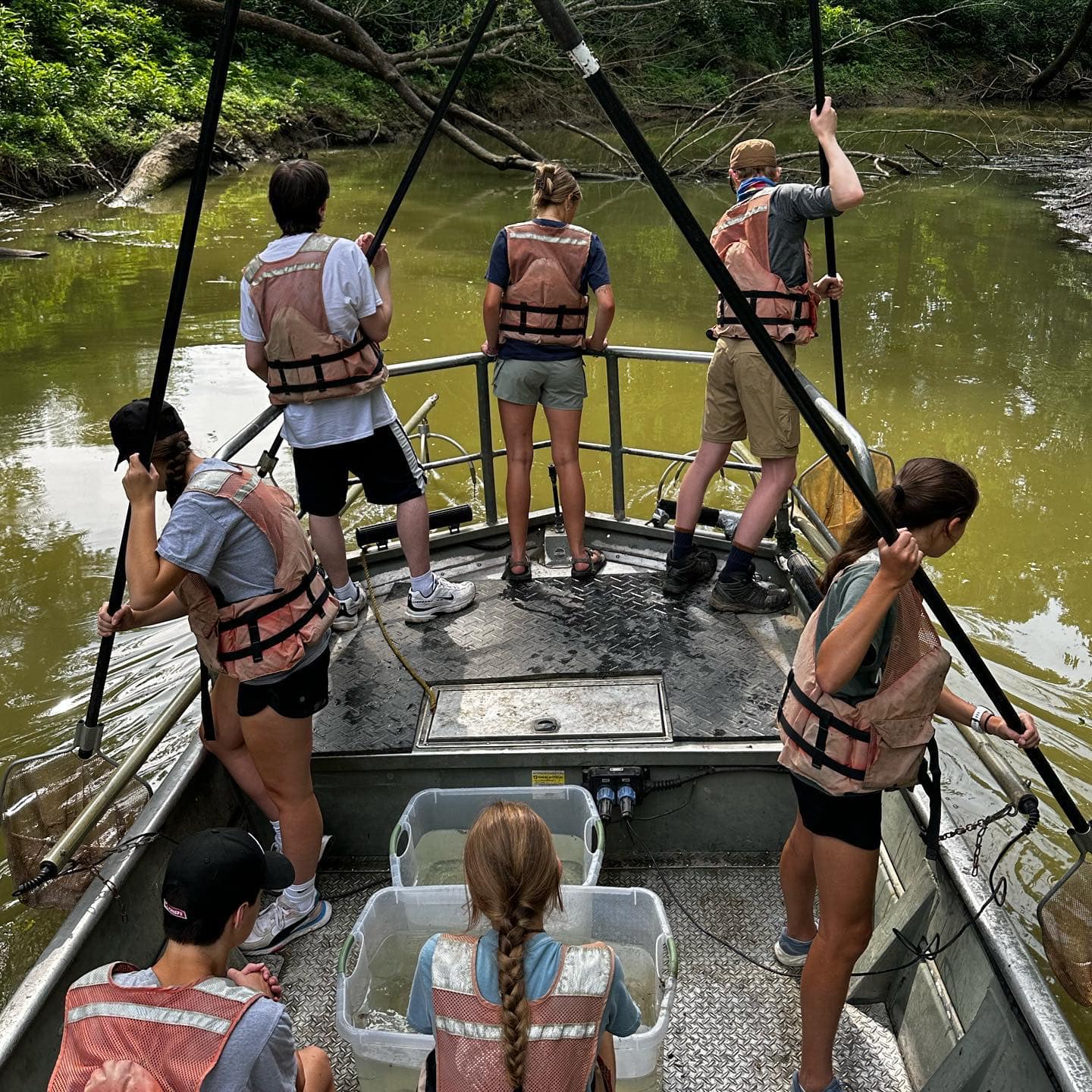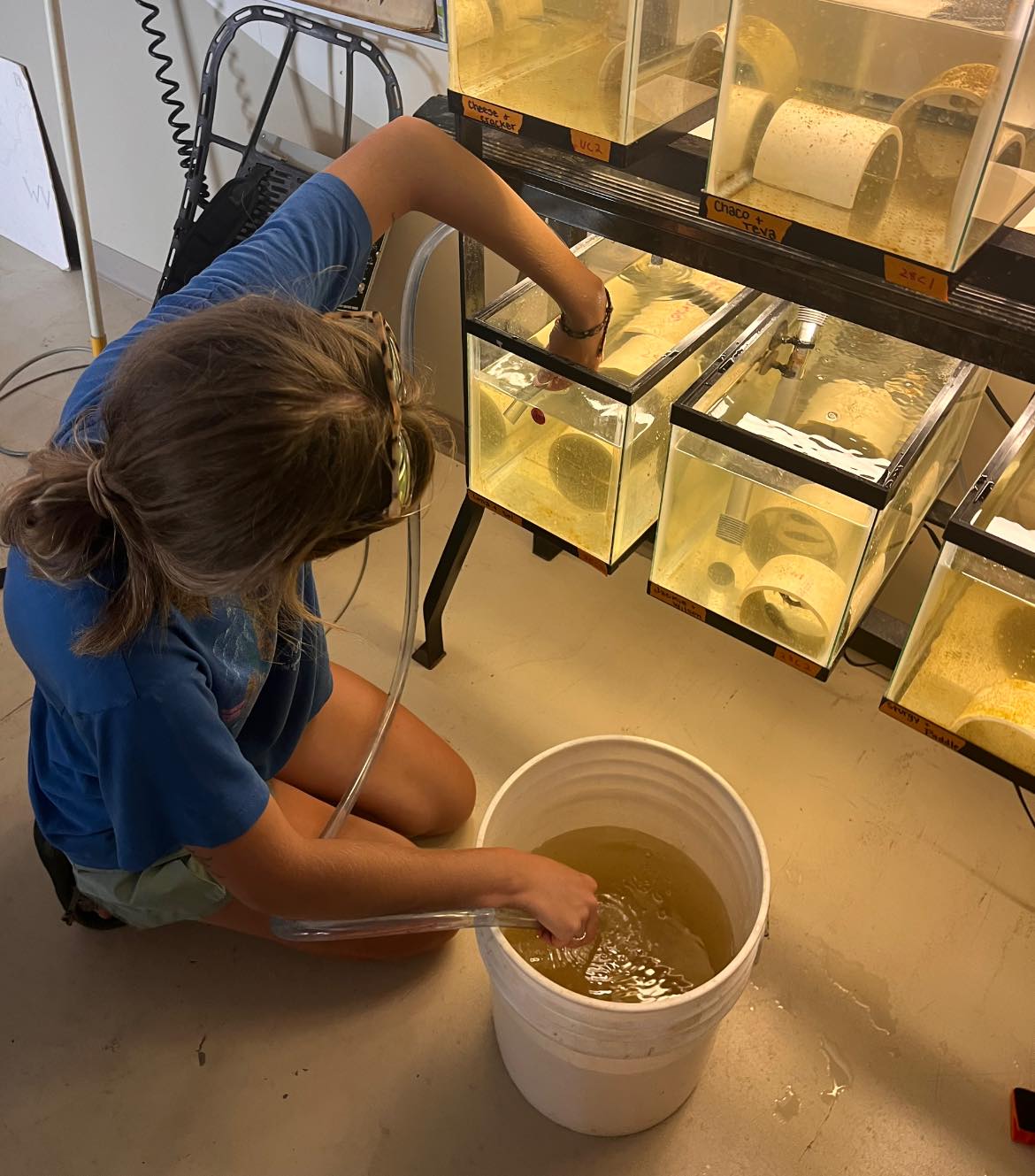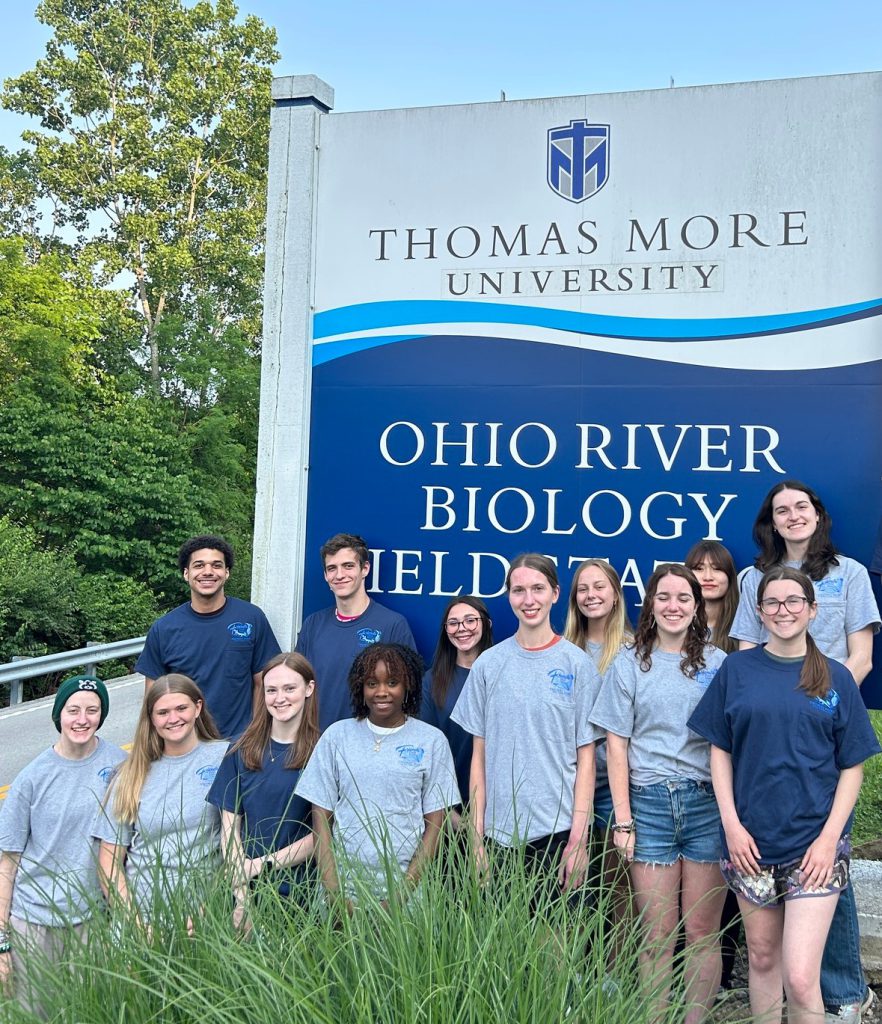
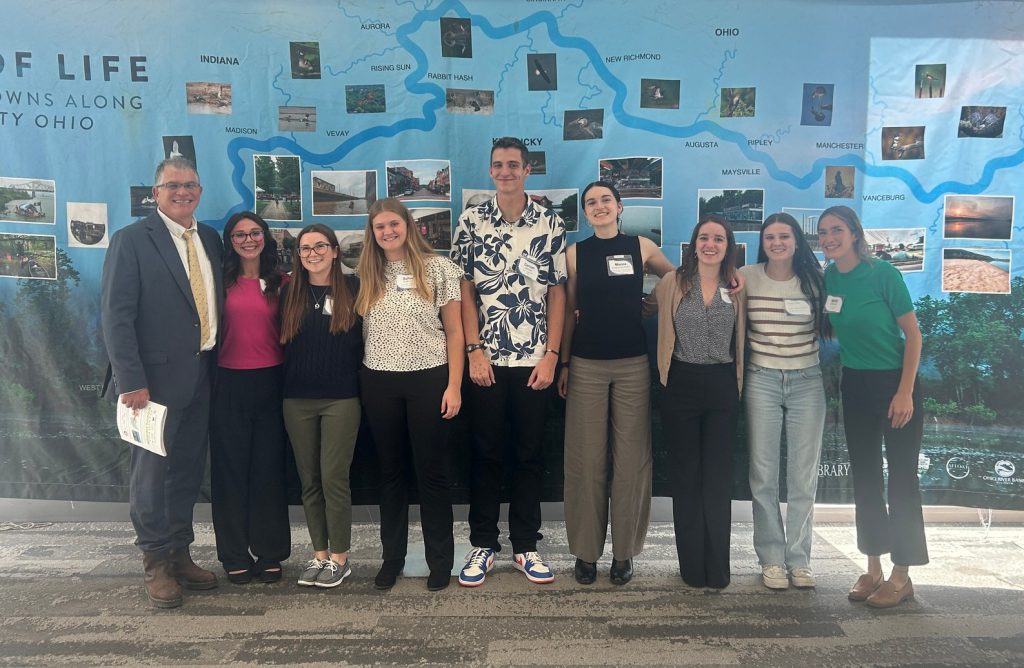
For ten weeks this summer, the Ohio River was a classroom and a catalyst for five undergraduate students at Thomas More University.
Living and working at the Ohio River Biology Field station, the CLIMBS-funded and Learning Hub supported program gave students the opportunity to present original research projects rooted in real-world watershed questions. At the end of the program, they presented their findings at the Ohio River Basin Confluence–a joint conference with the Kentucky Waterways Alliance, the Ohio River Basin Alliance, and the Ohio River way, with one student earning 2nd Place for Best Student Poster. Their success is reflective of the Learning Hub’s mission—mentored research leads to meaningful results. Their mentor? Professor Chris Lorentz, biology professor at Thomas More.
The students’ work spanned multiple disciplines:
- Aarianna Bess tracked E. coli and coliform levels in local streams, comparing dry-weather baselines to post-rain surges.
- Jessica Larka assessed stream health in Boone County’s Gunpowder Creek.
- Isaiah Voet investigated how native and invasive mussels differ in filtering heavy metals.
- Emerson Amy examined how predator visibility influences fathead minnow fecundity.
- Bailee Stidham explored how road-salt-driven salinity affects duckweed growth.
Together, these projects tackled water quality, ecosystem dynamics, and human impacts, while building technical skill and professional momentum. That growth is by design. The CLIMBS Learning Hub connects students across eight Kentucky institutions with faculty mentors and graduate near-peers, creating a statewide community grounded in experiential learning. Scholars build networks, clarify career paths, strengthen communication skills, and deepen their sense of belonging in STEM.
The momentum continues this spring. April Learning Hub sessions will focus on the Ohio River Basin and on engaging with nonprofits and scientific societies, helping students see how science informs decision-making and serves communities.
As CLIMBS builds hazard resilient research across the Commonwealth, the Learning Hub ensures the next generation of scientists is prepared to generate knowledge and apply it directly to the communities who need it most.